







Discover how modular and portable buildings in the UK can deliver fast, flexible and cost-effective space solutions for schools, businesses and public sector organisations. This blog explores pre-owned modular units, portable cabins and mobile classrooms, showcasing their benefits for modular offices, temporary accommodation and school classrooms. Learn how modular and offsite construction support sustainable buildings and the options to hire, lease or purchase the right solution for your needs.
Modular & Portable Buildings in the UK: Flexible Space for Today’s Needs
Discover how modular and portable buildings can give your organisation the extra space it needs—quickly, affordably and sustainably. This blog is dedicated to exploring modular buildings, portable cabins, mobile classrooms and pre‑owned modular units across the UK, and how they can work for schools, businesses and public sector organisations.
1. Why Modular and Portable Buildings?
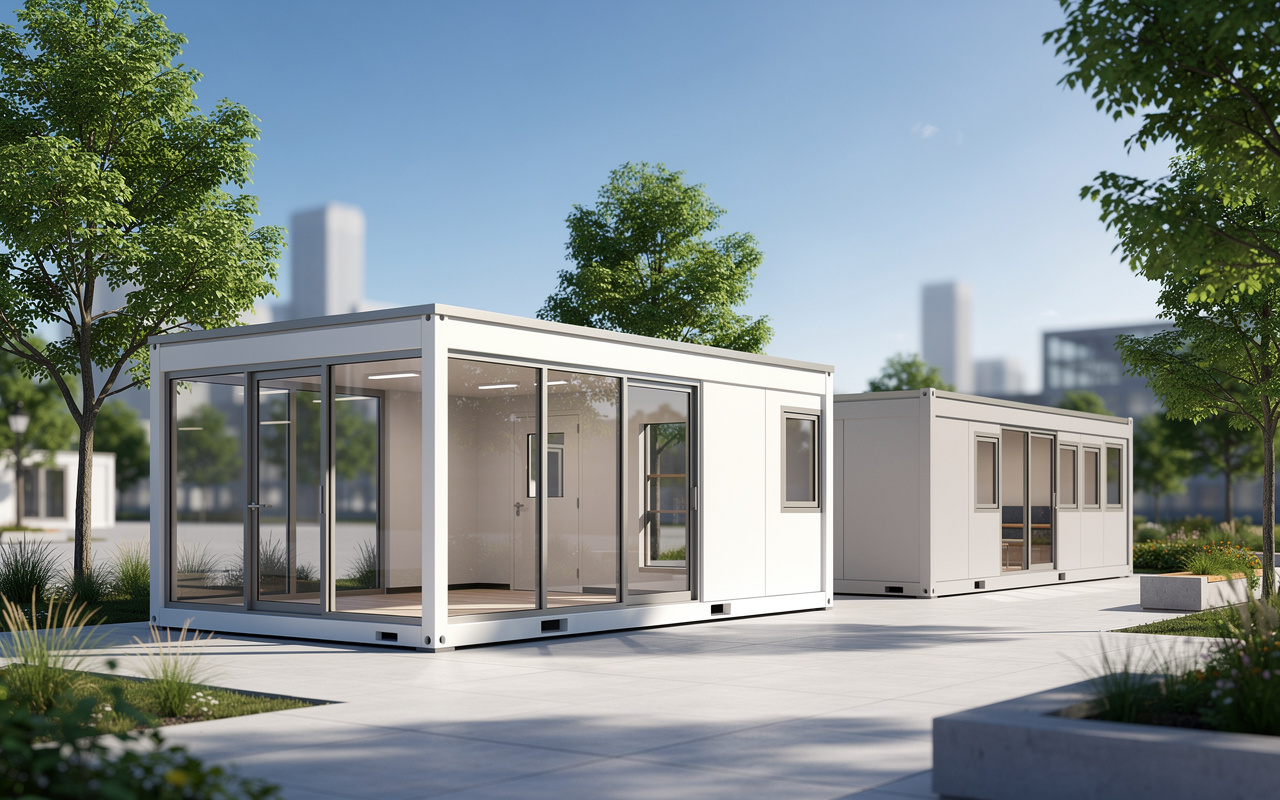
Modular and portable buildings are prefabricated structures that are manufactured offsite and then transported to your location for rapid installation. Instead of waiting months (or years) for a traditional building project, you can have high‑quality space ready in a fraction of the time.
1.1 What Are Modular Buildings?
Modular buildings are made up of individual sections—called modules—constructed in a factory. These modules are then delivered to site and assembled to form a complete building. They can be single‑storey or multi‑storey and configured for many uses, including:
- Modular offices
- School classrooms and teaching blocks
- Healthcare suites and welfare facilities
- Temporary accommodation
- Reception areas and visitor centres
Because the modules are manufactured in controlled conditions, quality and consistency are easier to achieve than on a traditional building site.
1.2 What Are Portable Buildings and Portable Cabins?
Portable buildings and portable cabins are self‑contained units that can be easily transported, sited and relocated. They may be used as standalone spaces or linked together to create larger facilities.
Common uses include:
- Site offices and meeting rooms
- Security huts and gatehouses
- Canteens and welfare units
- Storage rooms and workshops
- Short‑term classrooms and training spaces
Portable cabins are ideal when you need fast, flexible and temporary space—often in challenging or remote locations.
1.3 What Are Mobile Classrooms?
Mobile classrooms are a type of portable or modular building specifically designed for education. They provide extra teaching space for:
- Growing schools needing additional classrooms
- Temporary accommodation during refurbishment or new build work
- Specialist teaching areas (e.g. SEN rooms, science labs, music rooms)
Modern mobile classrooms can match or exceed the comfort and performance of traditional school buildings, with features such as:
- High levels of insulation and energy efficiency
- Integrated heating, cooling and ventilation
- IT and AV infrastructure for digital learning
- Accessibility features, ramps and compliant door widths
2. Key Benefits of Modular & Portable Buildings
Modular and portable buildings offer a combination of speed, flexibility and cost‑effectiveness that is hard to match with conventional construction.
2.1 Fast Installation and Minimal Disruption
Offsite construction means most of the work happens in the factory while your site is being prepared.
- Reduced programme times – Buildings can be delivered and installed in weeks, not months.
- Less disruption to operations – Essential for schools, hospitals, offices and public sector facilities that must remain open and safe.
- Predictable delivery – Factory production is less affected by bad weather and site constraints.
2.2 Flexible, Adaptable Space
Modular construction is inherently flexible:
- Add or remove modules as your needs change.
- Reconfigure internal layouts with partitions and open‑plan spaces.
- Stack modules to create multi‑storey buildings where land is limited.
Portable cabins and mobile classrooms can also be relocated to new sites, making them ideal for evolving organisations.
2.3 Cost‑Effective Solutions
Modular and portable buildings are often more economical than traditional builds because:
- Factory efficiencies reduce labour and waste.
- Build times are shorter, cutting preliminaries and overheads.
- Reduced disruption lowers indirect costs (for example, fewer decant facilities, less downtime).
Pre‑owned modular units and used modular buildings can deliver even greater savings, while still providing modern, compliant facilities when refurbished and configured correctly.
2.4 Sustainable and Low‑Waste Construction
Offsite and modular construction supports more sustainable buildings:
- Less waste – Materials can be optimised, recycled and reused in the factory environment.
- Lower embodied carbon – Reuse and refurbishment of existing modules avoids the carbon cost of new materials.
- Improved energy performance – Buildings can be designed with high insulation levels, efficient glazing and low‑carbon services.
When combined with renewable technologies (such as solar PV) and smart controls, modular buildings can help organisations meet ambitious carbon and sustainability targets.
3. New vs Pre‑Owned Modular Units
Both new and pre‑owned modular buildings can provide excellent accommodation. The right choice depends on budget, timescale and performance requirements.
3.1 New Modular Buildings
New modular buildings are designed and manufactured to your exact specification.
Typical advantages:
- Complete control over size, layout and appearance
- Latest building regulations compliance by design
- Easy integration of advanced systems (BMS, high‑spec HVAC, specialist labs)
- Strong design alignment with existing buildings and branding
They are ideal where you need a long‑term solution with highly specific requirements.
3.2 Pre‑Owned Modular Units and Used Modular Buildings
Pre‑owned modular units are previously used buildings that have been carefully removed, refurbished and prepared for reuse.
Key benefits:
- Lower cost – Significant savings versus new build.
- Fast availability – Units may be available from stock for quick delivery.
- Sustainable choice – Maximises the lifespan of existing buildings and reduces demand for new materials.
Used modular buildings can be refurbished with new finishes, windows, doors, insulation and mechanical and electrical systems to create spaces that feel like new, while retaining the cost and carbon advantages of reuse.
4. Applications by Sector
4.1 For Schools and Education
Schools, colleges and nurseries across the UK are under pressure to provide high‑quality learning environments despite limited budgets and growing pupil numbers. Modular and portable buildings are a proven solution.
Common educational uses include:
- School classrooms – Single or double classrooms, complete teaching blocks or specialist suites.
- Mobile classrooms – Rapid, temporary space during refurbishments or roll expansions.
- Staff rooms and offices – Additional workspace for teachers, administration and pastoral teams.
- Dining halls and breakout spaces – Flexible areas for lunches, clubs and wrap‑around care.
Benefits for schools:
- Work can often be scheduled outside term time to minimise disruption.
- Buildings can be adapted or relocated as rolls change.
- Pre‑owned modular classrooms provide cost‑effective capacity boosts.
4.2 For Businesses and Commercial Organisations
From SMEs to large corporations, businesses often need extra space quickly, without committing to long and disruptive building projects.
Typical business applications:
- Modular offices – Open‑plan or cellular offices, meeting rooms, collaboration areas.
- Temporary accommodation – Onsite welfare, rest areas and training rooms for project teams.
- Customer‑facing facilities – Sales suites, showrooms, pop‑up retail outlets.
- Back‑of‑house space – Storage, workshops and logistics hubs.
Key benefits for businesses:
- Ability to scale up or down in line with demand.
- Option to hire or lease to minimise capital expenditure.
- Improved speed to market for new locations or services.
4.3 For Public Sector and Community Organisations
Local authorities, NHS trusts, emergency services and community groups often require affordable, compliant space solutions in demanding environments.
Typical public sector uses:
- Healthcare buildings – GP consulting rooms, health centres, temporary clinics.
- Community facilities – Libraries, youth centres, community halls and visitor centres.
- Operational bases – Offices, control rooms, training centres and welfare spaces.
Why modular works well for the public sector:
- Robust compliance with building regulations and sector‑specific standards.
- Easier planning of phased projects alongside tight budget cycles.
- Sustainable procurement through reuse and offsite construction.
5. Modular Construction and Offsite Construction Explained
5.1 How Offsite Construction Works
Offsite construction refers to any building method where the majority of the structure is manufactured away from the final site and then transported for assembly. Modular construction is a key type of offsite construction.
The process typically follows these stages:
- Design and planning – Agreeing the brief, layouts, finishes and technical requirements.
- Factory manufacture – Modules are built in controlled conditions with integrated services.
- Site preparation – Foundations, utilities and access are prepared in parallel.
- Delivery and installation – Modules are transported to site and craned into position.
- Finishing and commissioning – Following installation, final connections, testing and certifications are completed.
5.2 Performance and Compliance
Modern modular buildings are engineered to meet the same (or higher) standards as conventional buildings, including:
- UK Building Regulations (structure, fire, accessibility, energy performance)
- Sector‑specific guidance for schools, healthcare and workplaces
- Health and safety requirements during installation and operation
Because components are manufactured in repeatable conditions, there is often better quality assurance and consistency than traditional on‑site construction can provide.
6. Sustainable Buildings and Environmental Benefits
Sustainability is a core theme of this blog. Modular and portable buildings support environmental goals in several ways.
6.1 Reduced Waste and Resource Use
- Precision manufacturing reduces offcuts and unused materials.
- Surplus materials can be reclaimed and reused in the factory.
- Pre‑owned modular units extend the life of existing buildings and avoid demolition waste.
6.2 Lower Carbon Footprint
- Shorter programmes mean fewer site visits and reduced transport emissions.
- Reusing structures cuts embodied carbon associated with new materials.
- Opportunities to integrate low‑carbon technologies from the outset.
6.3 Energy‑Efficient Operation
Modular buildings can be designed for high operational performance with:
- Advanced insulation and air‑tightness
- Efficient heating, cooling and ventilation systems
- LED lighting and smart controls
This lowers running costs while supporting carbon reduction plans and environmental certifications.
7. Hire, Lease or Purchase: Which Option Is Right for You?
When considering modular and portable buildings, you can usually choose between hiring, leasing or purchasing. Each option suits different circumstances.
7.1 Building Hire
Hiring is typically a short‑ to medium‑term solution.
- Ideal for projects with a defined timescale, such as refurbishments or temporary decants.
- Lower upfront cost; payments are spread over the hire period.
- Units can be off‑hired when no longer needed, avoiding long‑term commitments.
7.2 Leasing
Leasing spreads the cost of a building over a longer term, often with options to extend or purchase at the end.
- Helps preserve capital for other priorities.
- Provides predictable monthly or quarterly payments.
- Suitable for medium‑ to long‑term needs where flexibility is still required.
7.3 Outright Purchase
Purchasing may offer the best value over the full life of the building.
- You own the asset and can adapt or relocate it as needed.
- Particularly attractive where the building is needed on a permanent or long‑term basis.
- Pre‑owned modular buildings can reduce the upfront investment while still providing ownership benefits.
When comparing options, consider:
- Duration of need
- Budget and funding routes
- Internal approval processes
- Requirements for relocation or future expansion
8. What This Blog Will Cover
This blog is designed to be a practical, UK‑focused resource for anyone exploring modular and portable buildings.
You can expect content on:
8.1 Practical Guides and How‑Tos
- How to plan a modular office or temporary accommodation project
- Steps to add mobile classrooms or extra school classrooms
- How to choose between new and pre‑owned modular units
- Site preparation, foundations and service connections explained
8.2 Design, Specification and Compliance
- Layout ideas for modular offices and teaching blocks
- Meeting building regulations and sector standards
- Accessibility, safeguarding and security considerations
- Acoustic performance, comfort and wellbeing in modular space
8.3 Sustainability and Lifecycle
- How modular construction supports net zero strategies
- Real‑world examples of reused and refurbished buildings
- Tips for improving energy efficiency in portable cabins
8.4 Commercial and Procurement Insights
- Comparing hire, lease and purchase options
- Working with frameworks and public sector procurement routes
- Budgeting and whole‑life cost considerations
9. Who This Blog Is For
This blog is aimed at anyone in the UK who needs to deliver extra space efficiently and responsibly, including:
- School leaders, business managers and estates teams
- Facilities and property managers
- Local authority and public sector decision‑makers
- Business owners and project managers
- Community and charity leaders
Whether you are planning a single mobile classroom, a modular office suite or a complete modular campus, the goal is to help you make informed, confident decisions.
10. Start Exploring Modular and Portable Space
Modular buildings, portable cabins and mobile classrooms are no longer just temporary stopgaps. They are high‑performance, flexible and sustainable buildings that can support your organisation for many years.
On this blog, you will learn how to:
- Use pre‑owned modular units and used modular buildings to save money and carbon
- Create modular offices and temporary accommodation that feel permanent and professional
- Provide modern, comfortable school classrooms and mobile classrooms for pupils and staff
- Navigate modular and offsite construction with confidence
- Decide whether to hire, lease or purchase the best solution for your needs
Explore the articles, guides and case studies to see how modular and portable buildings can solve your space challenges—and how you can turn fast, flexible construction into a long‑term asset for your organisation.